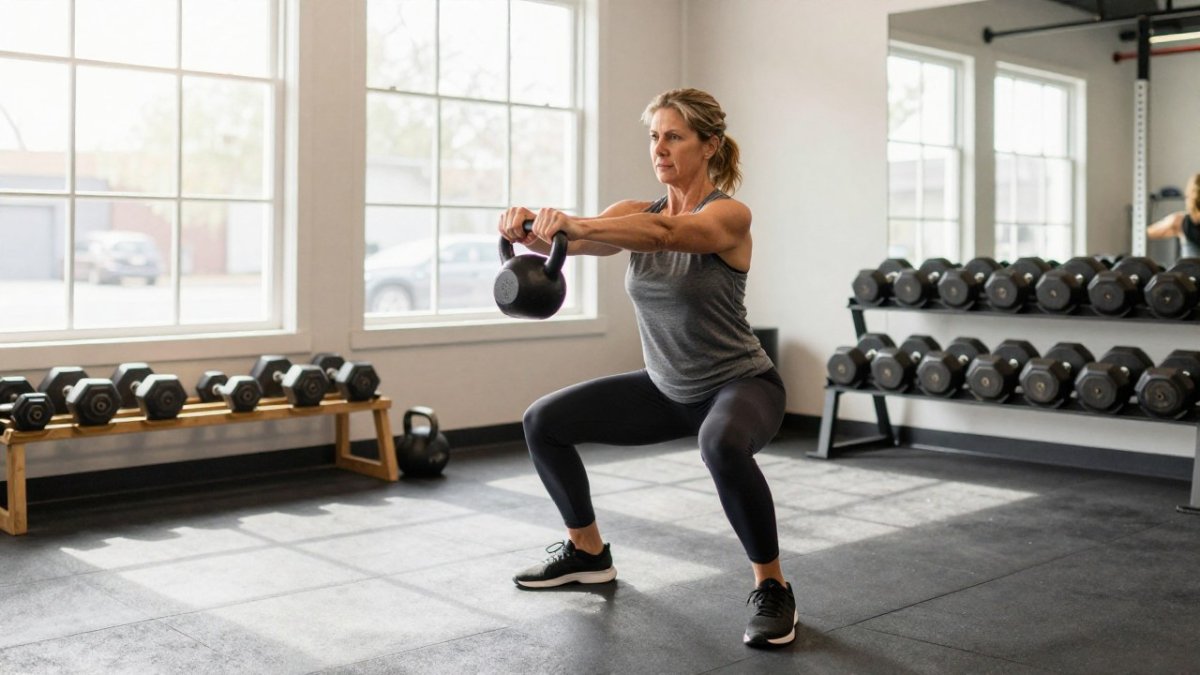
Is Group Fitness Good for Your 40s? A Practical Guide
Quick Summary
Group fitness can work well in your 40s because it combines coached workouts with the motivation of training alongside others. Its main benefits are accountability, structure and community, though fit depends on your fitness level, joint health, schedule and goals.
- Scheduled classes are harder to skip than workouts you plan alone.
- An instructor sets the pace, so you do not have to guess what to do next.
- Ask instructors how they modify moves, since many classes are built for younger exercisers.
- Two to three strength and two to three cardio sessions per week is a practical starting point.
- Check with your doctor first if you have heart disease, high blood pressure, joint problems or other health concerns.
Table of Contents
- Why Group Fitness Can Work Well in Your 40s
- Group Exercise Advantages and Disadvantages After 40
- Group Exercise vs Individual Exercise: Which Fits Your Goals
- Best Group Fitness Classes for Women Over 40
- How Many Times a Week Should a 40-Year-Old Work Out?
- Safety, Modifications and When to Check With a Doctor
- Choosing Your First Class: A Starter Checklist
- Booking Your Free Consultation at New Body Architects
- Frequently Asked Questions
Why Group Fitness Can Work Well in Your 40s
Group fitness can be a strong option for many women over 40. Group training combines coached workouts with the motivation of training alongside others, which helps many people stick with a routine. (Source: Physical Activity Guidelines for Americans)
The main benefits tend to show up in three areas:
- Accountability: A scheduled class is harder to skip than a workout you plan alone.
- Structure: An instructor sets the pace, so you do not have to guess what to do next.
- Community: Regular faces and friendly support make showing up feel easier.
Group fitness is not automatically the right choice for everyone. Your fitness level, joint health, schedule and goals all matter. The sections below explain how to decide.
Group Exercise Advantages and Disadvantages After 40
Group classes offer real advantages, but they have trade-offs worth knowing before you commit.
Advantages:
- Lower cost per session than private training
- Built-in motivation from a shared class schedule
- Exposure to a variety of formats, such as strength, cardio and mobility work
- Social connection, which many adults value as they get busier
Disadvantages:
- Instructors may not know your health history or past injuries
- Classes often move fast, which can make it hard to correct form
- Some classes are designed for younger, higher-intensity exercisers
- Loud, crowded rooms may not suit everyone
A common mistake is assuming every class is built for your age. Ask the instructor how they modify moves. A good class leader will offer lighter options without making you feel singled out.
Group Exercise vs Individual Exercise: Which Fits Your Goals
Group and individual training serve different needs. Group classes work well for general fitness, social motivation and a lower price point. Individual training suits people who have injuries, specific strength targets or a need for close form feedback.
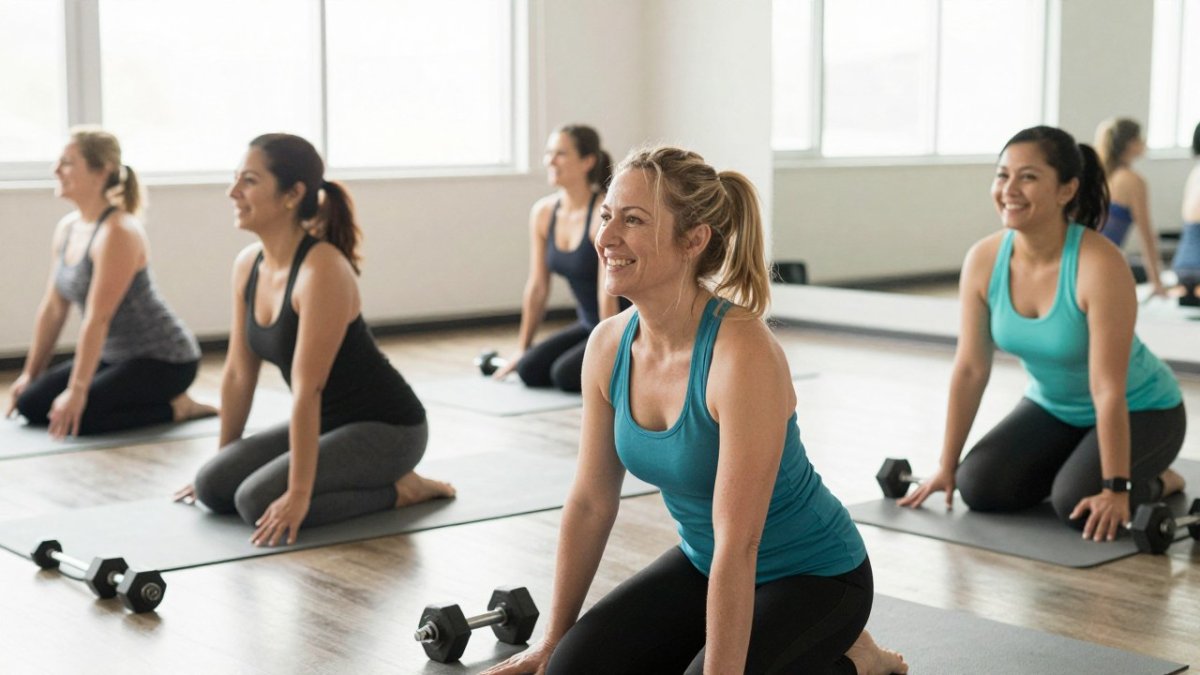
Private one-on-one training is built around individual goals and schedules. For women who want individualized programming, that approach is often the better fit.
| Option | Best For | Coaching Level | Cost Level |
|---|---|---|---|
| Large group class | Social motivation, general fitness | Shared instructor | Lower |
| Semi-private training | Coached small-group workouts | Closer attention | Middle |
| Private 1-on-1 training | Injuries, specific goals | Full individual focus | Higher |
For current prices or a quote, visit the New Body Architects website. If you are unsure which format fits, start with a free consultation so a coach can recommend an approach.
Best Group Fitness Classes for Women Over 40
The best class depends on your current fitness and what you want to improve. These formats are often recommended for adults over 40:
- Strength-focused classes: Build and maintain muscle, which supports metabolism and daily function.
- Low-impact cardio: Improves heart health while being gentler on knees and hips.
- Mobility and balance classes: Support flexibility and reduce fall risk.
- Interval classes at a modified pace: Boost conditioning when you can scale intensity.
Ask for a trial class before you buy a package. A short trial shows whether the pace, music and instructor style work for you.
How Many Times a Week Should a 40-Year-Old Work Out?
Most adults benefit from a mix of cardio, strength work and recovery, but the right weekly dose depends on your training history, joint health and schedule. A practical starting point is two to three strength sessions and two to three cardio sessions per week, with at least one full rest day and lighter mobility work woven in.
Start where you are. If you have been inactive, begin with two or three shorter sessions per week and build up gradually over four to six weeks. A balanced week might include:
- Two strength classes for muscle and bone support
- One or two cardio sessions for heart health
- One mobility or recovery session or a rest day (Source: benefits of resistance training)
Here is a sample week that combines group classes with recovery and avoids stacking high-intensity days back to back:
| Day | Session | Purpose |
|---|---|---|
| Monday | Strength class (full body) | Build and maintain muscle |
| Tuesday | Low-impact cardio (walk, cycle, swim) | Aerobic base |
| Wednesday | Mobility or yoga class | Range of motion, recovery |
| Thursday | Strength class (full body) | Muscle and bone support |
| Friday | Rest or easy walk | Recovery |
| Saturday | Cardio class at a moderate pace | Conditioning |
| Sunday | Rest | Recovery |
This template is a starting point, not a prescription. If you are new to group classes, try one strength class and one cardio class in your first week, then add a third session once you recover well. A common pattern is to feel eager and stack too many hard classes early; instead, increase weekly volume by no more than about 10 percent per week and keep at least one easy day between hard efforts.
Watch out: if you are sore for more than 48 hours after a class, or if your joints ache in a way that persists into the next day, that is a signal to reduce intensity or add a recovery day rather than push through.
Track how you feel over several weeks. Improved energy, sleep and workout consistency are useful signs of progress, often more meaningful than the scale alone. If you are combining classes with a home routine, keep a simple log of sessions, perceived effort and any aches so you can spot patterns and adjust.
Safety, Modifications and When to Check With a Doctor
Safety should come first when starting or changing an exercise routine after 40. Speak with your doctor before beginning a new program if you have heart disease, high blood pressure, joint problems, recent surgery, diabetes, or other health concerns. If you have been inactive for a long time, a check-in with your doctor is a reasonable first step even if you feel healthy.
A practical pre-class screening you can do yourself:
- List any injuries, surgeries or chronic conditions and share them with the instructor before class.
- Ask which movements are included and whether seated, low-impact or lighter-load versions are available.
- Tell the instructor if you are returning after a break of more than a few months.
- Arrive early enough to mention any limitations privately.
Watch for warning signs during exercise, including:
- Chest pain or pressure
- Dizziness or lightheadedness
- Shortness of breath that feels out of proportion to the effort
- Sharp or lasting joint pain
Stop the activity and seek medical advice if any of these occur. Good classes often offer modifications for impact, range of motion and load. Tell your instructor about any injuries before class starts, and ask for a demonstration of the modified version if it is not offered.
Returning after a long break deserves its own plan. If you have a history of joint pain, back issues or a previous injury, a session with a coach who can watch your form may be useful before you join a large class.
Watch out: if a class instructor dismisses your question about modifications or pushes you to keep up with the group despite pain, that is a sign the class may not be the right fit. A well-coached class should make the modified version feel normal, not singled out.
Choosing Your First Class: A Starter Checklist
Use this checklist to pick a class that fits your needs:
- The instructor has relevant certification and experience with adults over 40
- The class offers modifications for common limitations
- The pace matches your current fitness level
- The schedule fits your work and family life
- You can try a trial class before committing
- The space feels welcoming and clean
If you want a plan built around your body and schedule, book a free consultation to talk through your options. Personalized coaching is available for women over 40 in Plantation, FL. For a broader look at cost and value, read our guide on whether personal training is worth the cost.
Booking Your Free Consultation at New Body Architects
If group fitness sounds like a good fit, the next step is a conversation. At New Body Architects, a free discovery call helps you talk through your goals, health history and schedule before choosing a program. Book a free discovery call and pick a time that works for you.
Last Updated: November 22, 2026
Frequently Asked Questions
Is group fitness good for women in their 40s?
Group fitness can be a strong choice in your 40s because it adds structure, accountability and social connection, which many people find keeps them consistent. The benefit depends on the class. Look for strength-focused sessions, instructors who offer modifications and classes that match your current fitness level. If you have joint pain, a recent injury or a chronic condition, check with your doctor before starting a new program. Start with a few sessions and notice how your energy, strength and recovery respond.
How many times a week should a 40-year-old work out?
Many adults in their 40s do well with about three to four sessions a week, mixing two or three strength sessions with some moderate cardio and at least one or two rest or recovery days. Public health guidance commonly recommends at least 150 minutes of moderate aerobic activity and two or more days of muscle-strengthening work each week for adults. Beginners should start lower and build up gradually. Group classes can fill several of these slots while leaving room for recovery.
Is group exercise better than working out alone?
Neither option is better for everyone. Group exercise offers structure, a set schedule, an instructor who can correct your form and a social environment that many people find motivating. Solo workouts give you control over timing, intensity and pacing, which can help if you have a demanding schedule or prefer privacy. Many women over 40 combine both, using classes for accountability and strength work and solo sessions for flexibility or recovery.
How do I choose a group fitness class that suits my fitness level?
Start by asking the instructor or front desk whether the class is beginner-friendly and whether modifications are offered for common movements. Watch a class before committing if you can. Check that the pace allows you to talk in short sentences, that you can keep good form and that you can rest when needed. Ask about instructor training and certifications, and avoid classes that push you to keep up with much younger participants at the expense of your technique.


